Insights from Ineco Energy UK for Commercial & Industrial Energy Users
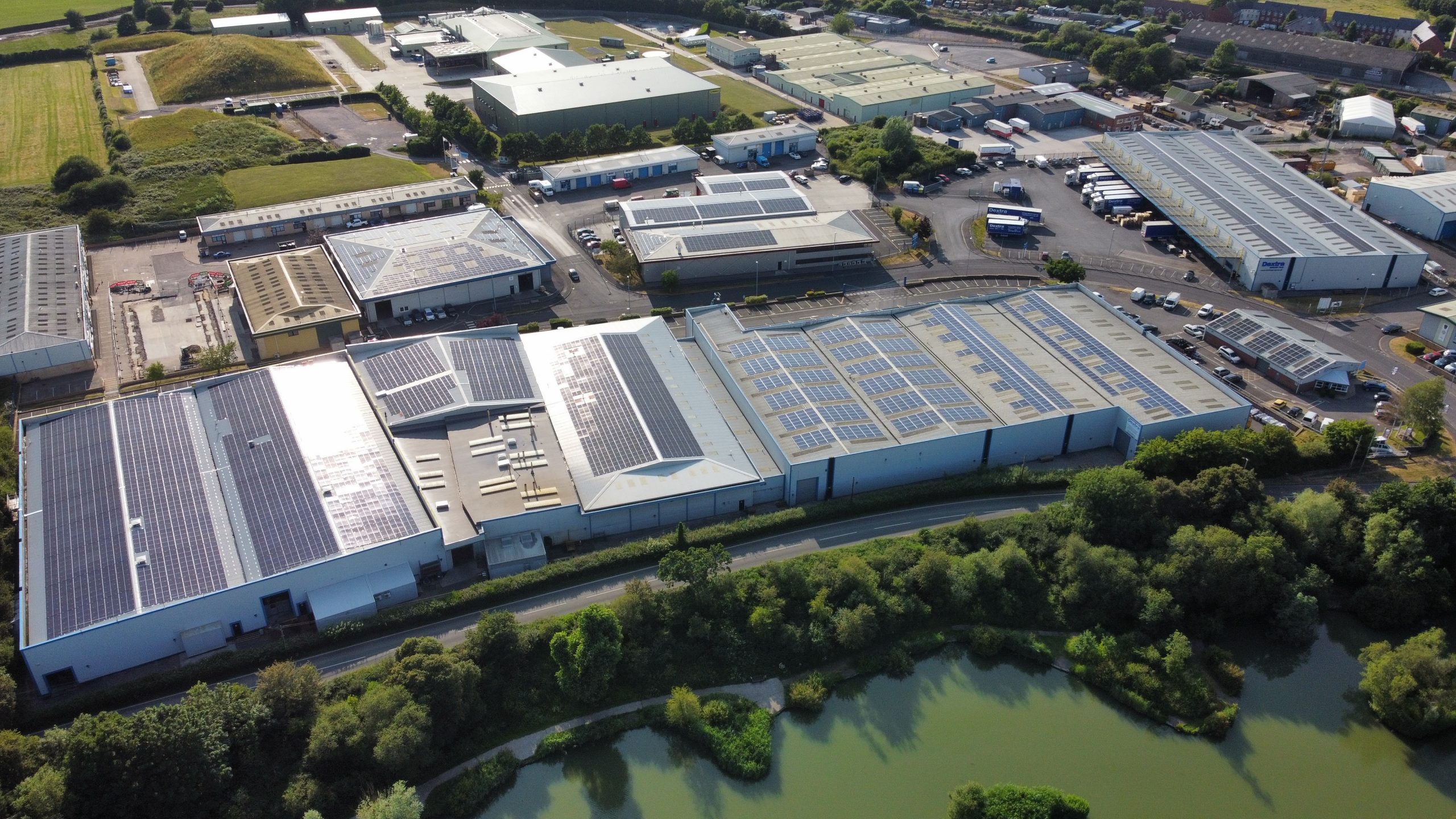
For UK commercial and industrial (C&I) energy users, 2026 is not simply a good year to consider solar, it is a strategic window that is unlikely to repeat itself.
Electricity prices remain structurally high, non-commodity charges continue to rise, UK sunshine records keep breaking, and global solar module prices have reached an unsustainable floor. Together, these factors make the business case for onsite solar in the UK in 2026 the strongest it has ever been.
The question is no longer “Should we invest in solar?” but “How much money are we prepared to lose by waiting?”
Electricity Rates Risk
A short history of electricity.
When Putin invaded Ukraine the wholesale electricity price rocketed. Wholesale electricity prices have eased since their 2022 peak but are still double what they were pre-war / 2022. UK business energy bills remain stubbornly high with some of the highest electricity rates in the developed economies.
The future of electricity…
Whilst wholesale costs is much more stable, for now… The growing burden comes from non-commodity charges: network reinforcement, balancing costs, and policy levies required to maintain and decarbonise the grid. These costs are rising irrespective of wholesale market movements as outlined in a recent select committee hearing.
In 2026:
- Non-commodity costs already make up over half of a typical UK business electricity bill.
- Transmission charges and balancing costs are set to rise year-on-year as the UK undertakes a multi-billion pound grid upgrade.
While businesses can negotiate their commodity rate, they cannot negotiate their share of network and policy costs. As a solution, solar is the only long-term hedge. How this works is that every kWh generated onsite is a kWh not exposed to these rising charges so solar fixes the majority of your electricity cost for 25–30 years, turning a volatile cost base into a stable, predictable one. From a loss-aversion viewpoint: every year you delay locks in another year of unnecessary exposure.
Solar is already the cheapest electricity in history.
Regardless of your political views, the facts are that solar is the cheapest source of electricity in history. The International Energy Agency (2020) found that solar PV is the cheapest source of electricity in history in many regions. This has been reinforced by International Renewable Energy Agency data showing that around 90% of new renewable capacity added in 2024 undercuts fossil fuel alternatives. At the same time, global investment trends show that clean energy investment now significantly exceeds fossil fuels, with solar representing the largest single share (IEA, 2024)
For UK commercial and industrial sites, the contrast is stark:
- Average UK grid supplied electricity is 25p/kWh (inclusive of non-commodity costs) which is variable.
- Commerical & Industrial rooftop solar delivers electricity at an average rate of 5p/kWh which is fixed.
- Delivery a 20p / kWh saving or an 80% which will compound over time.
Solar module prices are rising—2026 is the last year of “bottom-of-the-cycle” pricing
Global module prices collapsed in 2023–25 due to Chinese oversupply. This created today’s historically low prices—but at the expense of manufacturers’ margins.
The cycle is now turning:
- Many major manufacturers posted significant losses selling below cost.
- China is abolishing its 9% export VAT rebate on solar modules from April 2026.
- Raw Material costs have increased.
- Module prices have already risen 30%+ since late 2025 as suppliers adjust.
The conclusion is clear, the market floor has been reached and is heading upwards. Buying in 2026 allows businesses to secure hardware before global pricing resets higher.
Waiting means paying more for the same system, whilst loosing even more money due to higher electricity rates and thus operating costs.
Climate trends are quietly improving UK solar economics
Australia is often thought of as the antithesis of the UK Climate and unsurprisingly has one of the largest rooftop solar markets in the world. However due to the electricity rates mentioned in the sections above. The business case is better in the UK which cant always be said of the climate.
The outdated perception that the UK is “too cloudy for solar” is increasingly misaligned with reality. Solar works on daylight irradiance received, with the best generation days often being the brighter but cooler days, often experienced in spring as an example. Furthermore, Met Office data shows the UK is becoming consistently sunnier as climate patterns shift due to climate change.
- 2025 was the sunniest year on record, with 1,648.5 sunshine hours nationally
- England recorded its sunniest year ever, with Wales and Scotland close behind recording near-record levels
- Since the 1980s, the UK has warmed by approximately 0.25°C per decade, increasing the frequency of high-pressure, sunny periods
This trend directly improves solar generation. Systems installed now will capture the most productive years for generations to come.
The loss-aversion lens: what inaction actually costs
Most investment decisions focus on return. Strategic decisions should also account for irreversible loss. By delaying solar investment, businesses incur:
- Lost profits due to higher operating costs.
- Risk exposure to rising electricity rates
- Improved sustainability credentials.
What forward-thinking businesses are doing now
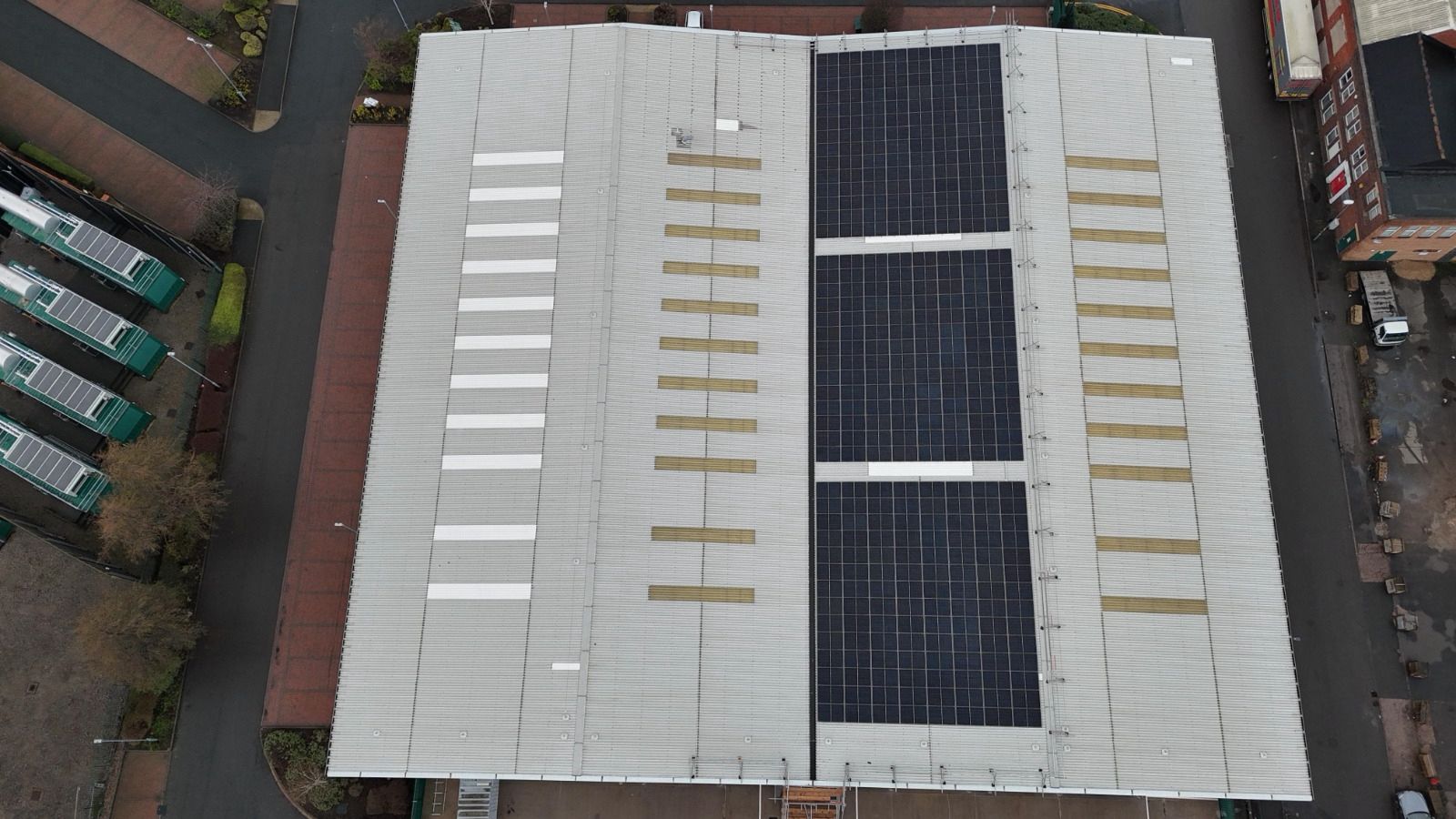
Life on earth would be unsustainable without the sun. Businesses the world over are harnessing the power of the sun to generate electricity. From the large tech giants, retail behemoths and or the titans of industry are deploying solar at speed and scale. Forward thinking businesses in 2026 are:
- Securing grid capacity – one of the critical paths for a solar project.
- Locking solar panel pricing – ahead of April 2026 to protect against global panel price increases.
- Quantifying the “do nothing” cost and making it visible at board level
- Exploring funding options that diverts cashflows from energy companies to solar assets.
- Choosing the right partner to design, build and maintain their solar system.
Conclusion: 2026 is the inflection point
Rising electricity rates risk, commercially competitive coupled with record sunshine and the final window of bottom-cycle pricing have all aligned in 2026.
Viewed through a loss-aversion lens, not investing in solar in 2026 is not a neutral decision. It is an active choice to:
- Overpay for electricity
- Remain exposed to rising electricity costs.
- Miss record-yield years
- Purchase the same asset later at a higher price
For UK businesses, the question is no longer whether solar makes sense, but what waiting will cost.
Written By

Angus Rose
Director at Ineco Energy
Angus Rose is a Director at Ineco Energy, bringing over a decade of expertise in delivering innovative energy solutions to public and private sector clients. Passionate about renewable energy and its critical role in addressing climate change, he is committed to driving a sustainable future. In 2016, Angus co-founded Ineco Energy with a clear mission: to deliver clean energy for better business and a better world. Under his leadership, the company has become a trusted partner in the renewable energy sector, specialising in commercial and industrial rooftop solar projects. From initial consultation to project completion, Ineco Energy manages the entire lifecycle, ensuring seamless execution and long-term impact. With a strong focus on energy efficiency and sustainability, Angus continues to lead initiatives that help businesses reduce their carbon footprint and reliance on the grid while maximising financial benefits.